
Brief
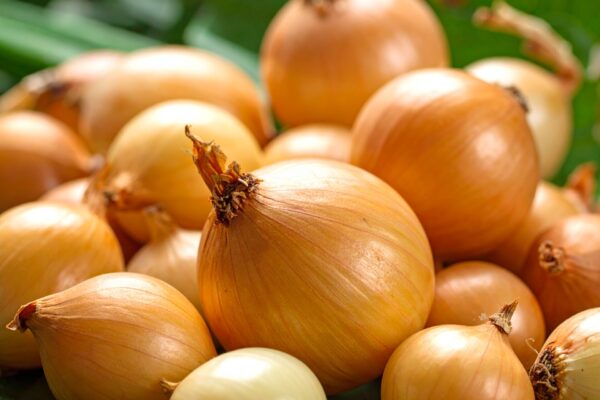
Parrish Farms is a third-generation, family-run farm based in the picturesque Bedfordshire countryside. Established in 1927, the farm has grown from a small dairy enterprise into a leading grower of onions and shallots. With over 150 acres dedicated to shallots alone, Parrish Farms focuses on growing high-quality crops year-round using a blend of traditional techniques and modern technology.
As a farm committed to environmental stewardship and biodiversity, Parrish Farms consistently looks for ways to enhance soil health and reduce reliance on synthetic inputs – without compromising crop quality.
Challenge
The farm’s location on the Greensand Ridge provides rich sandy soils ideal for shallots and onions. However, the land presents its own set of challenges. Fields often contain a mix of soil types, some of which are light and prone to slumping due to low organic matter levels. This variation complicates land management and crop uniformity.
To continue growing top-quality shallots sustainably, the team needed a solution to:
Improve soil structure and organic matter content
Reduce dependency on artificial fertilisers
Enhance moisture retention and nutrient supply
Support long-term soil health goals
Solution
To meet these needs, Parrish Farms introduced Envar’s PAS100 10mm Compost Soil Improver into their land management strategy.
Key actions included:
Sourcing a consistent, low-contaminant soil improver: After trialling products from other suppliers, Parrish Farms selected Envar’s compost for its superior cleanliness from large admixtures and plastics and uniform 10mm grade.
Application strategy: Using a local contractor with modern muck-spreading equipment, the compost was applied at a rate of 20t/ha across selected fields.
Integration into sustainable practices: The compost use complements existing sustainability strategies, including GPS-guided precision sowing, controlled traffic farming, biodiversity buffers and over 400kW of on-site solar energy powering cold, ethylene-controlled storage facilities.
Outcome
While still in the early stages of use, Parrish Farms is already seeing promising signs from the compost application:
Improved soil quality: Although formal data is pending, early observations show better crop establishment and growth, particularly in areas where compost heaps were placed.
Moisture retention: The increase in organic matter is believed to enhance the soil’s water-holding capacity, providing a stronger growing medium for cash crops.
Reduced artificial input reliance: The nutrient profile of Envar’s compost supports Parrish Farms’ goal to decrease dependence on bagged fertilisers.
Operational efficiency: Envar’s reliable service and logistics made sourcing and applying the compost straightforward and time-efficient.
Recommendations
Parrish Farms plans to continue applying Envar’s PAS100 compost at 20t/ha across all fields on a five-year rotation. Their experience offers valuable insights for other growers looking to enhance soil health and sustainability:
Choose clean, consistent compost: High-quality, well-screened compost makes a significant difference in ease of use and overall performance.
Work with trusted suppliers: Reliable logistics and support – like those provided by Envar – are essential to smooth implementation.
Plan application timing carefully: For best results, avoid dry, windy conditions, particularly when using finer-grade compost.
Integrate with broader sustainability goals: Compost use is most effective when part of a wider strategy, including cover cropping, reduced tillage and renewable energy adoption.